
By Clint Baxter
Part 1: Opening Up the Cockpit Sole
This season, our crew (Evan, Claude, and myself) is trying something new.
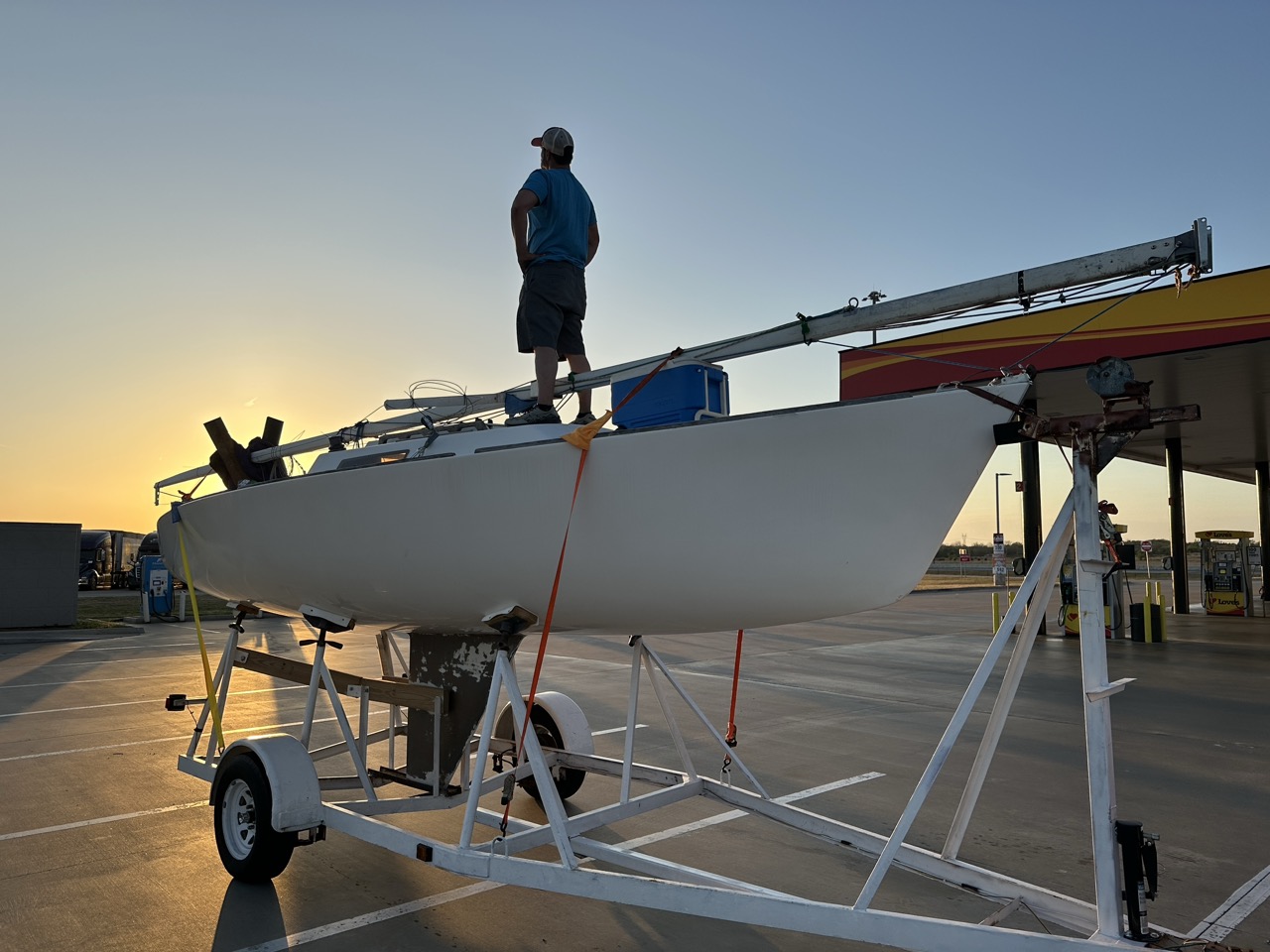
After spending time racing in PHRF mixed-fleet racing, where different types of boats compete using handicap ratings, we decided to spend a season trying our hand at one design racing. For the 2026 racing season, we have chartered a 1989 J/22 that needs a little TLC before it is ready to race.
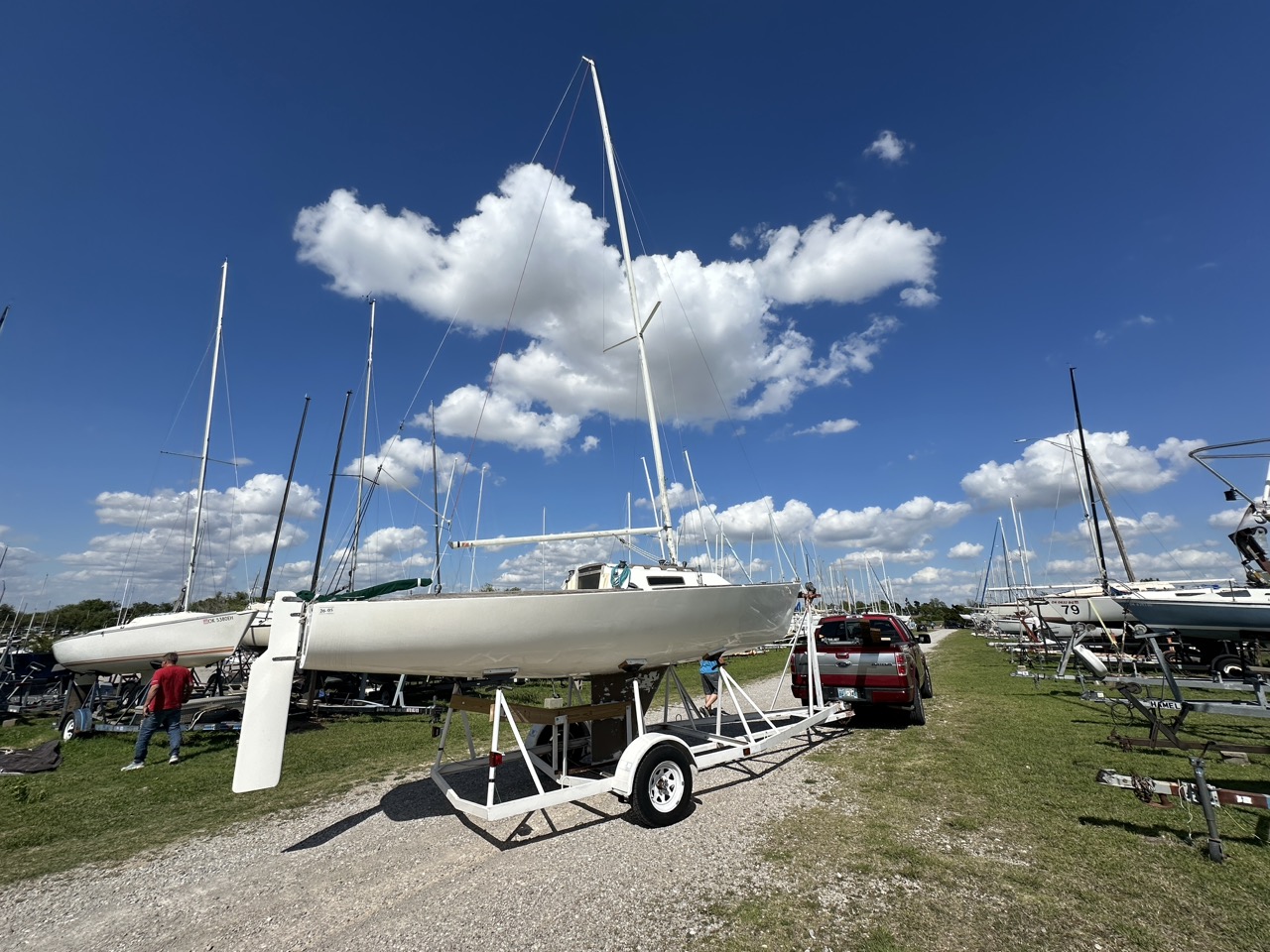
If we enjoy the season and the boat proves to be a good fit, we may eventually purchase it. But first things first: before any serious racing can happen, the boat needs to be made solid, safe, and race-ready.
The biggest project so far is the cockpit sole – the floor of the cockpit – where the boat has had some water ingress and the core is wet. Like many fiberglass sailboats, the cockpit sole is built as a cored panel: fiberglass skin on top, fiberglass skin on bottom, and core material in the middle to add stiffness without adding a lot of weight.
When that core gets wet, it can soften, rot, or lose its bond to the fiberglass skins. The result is a cockpit floor that may feel soft, flex underfoot, or continue to deteriorate if it is not repaired.
So before racing season begins, we decided to open it up and do the repair properly.

Why Try One Design Racing?
One design racing is a little different from PHRF mixed-fleet racing.
In PHRF racing, different boats race against each other using a handicap system intended to even out performance differences. A Catalina 22, a J/22, a Capri 25, and a variety of other boats can all race together, with finish times corrected based on rating.
One design racing is more direct. The boats are the same design, racing boat-for-boat. That means the differences come down more to crew work, boat handling, preparation, tactics, tuning, and decision-making.
In other words, fewer excuses.
That is part of what makes it appealing. If another J/22 sails past you, it probably was not because they had a longer waterline, a bigger rig, or different wind. They were likely sailing the boat better.
That kind of racing can be humbling, but it is also one of the best ways to learn.
Finding the Problem
The cockpit sole on this boat had clearly seen some years of use. That is not unusual for a 1989 race boat. Cockpits take abuse: crew weight, hardware loads, rainwater, dock lines, dropped tools, and years of sun and weather.
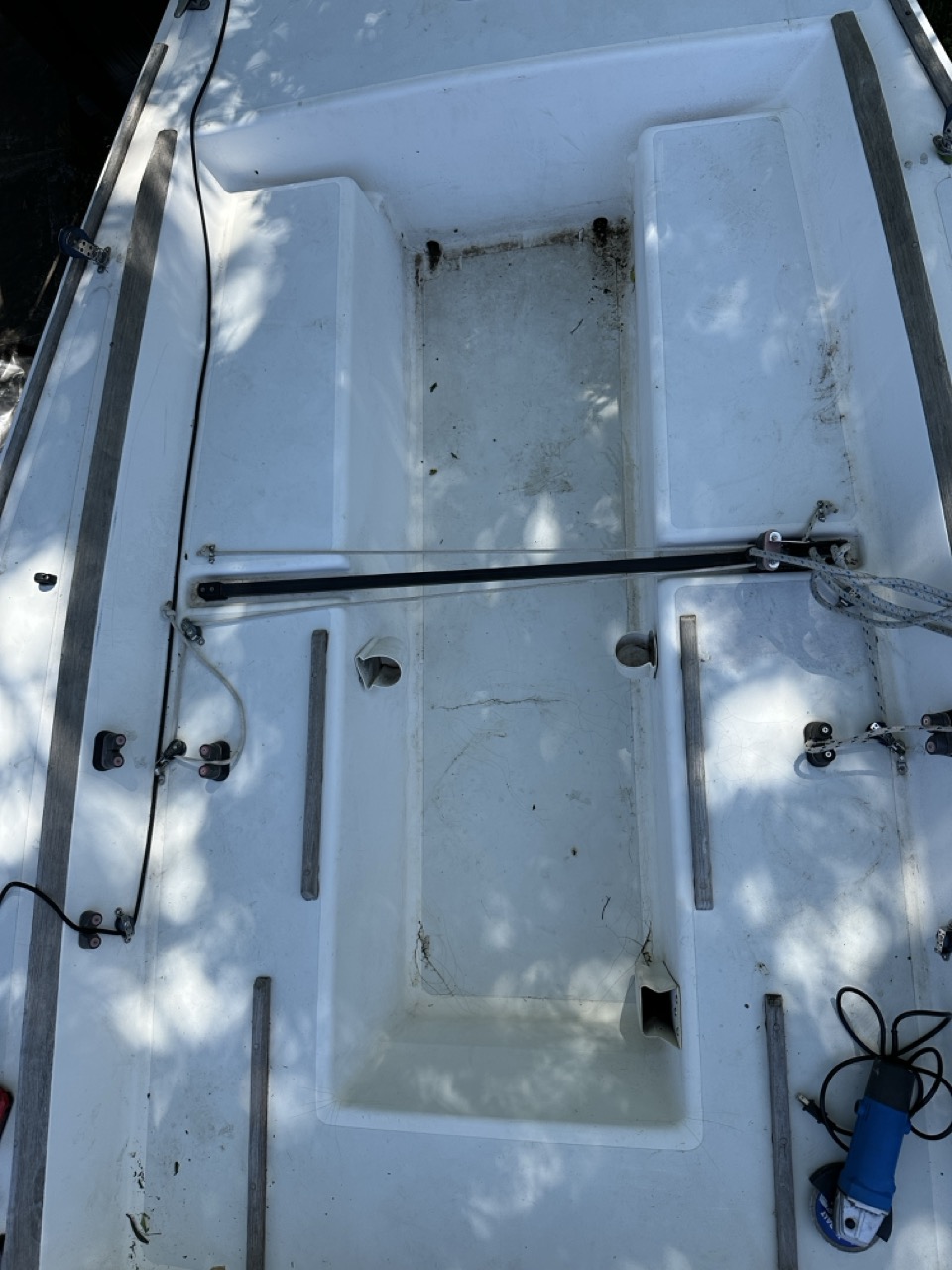
Once we started investigating the soft area, it became clear that water had gotten into the core. Some of the core was wet and rotted. Other areas were still dry, but because we were already opening up the repair section, we removed the remaining core in that area as well so the new material could go back in as one clean, consistent repair.
The goal here is not cosmetic. The goal is structural: restore stiffness, eliminate the compromised material, and make the cockpit sole solid again before the boat goes racing.
Cutting Out the Top Fiberglass Skin
Evan and I started by marking the repair area and cutting out the top fiberglass skin.
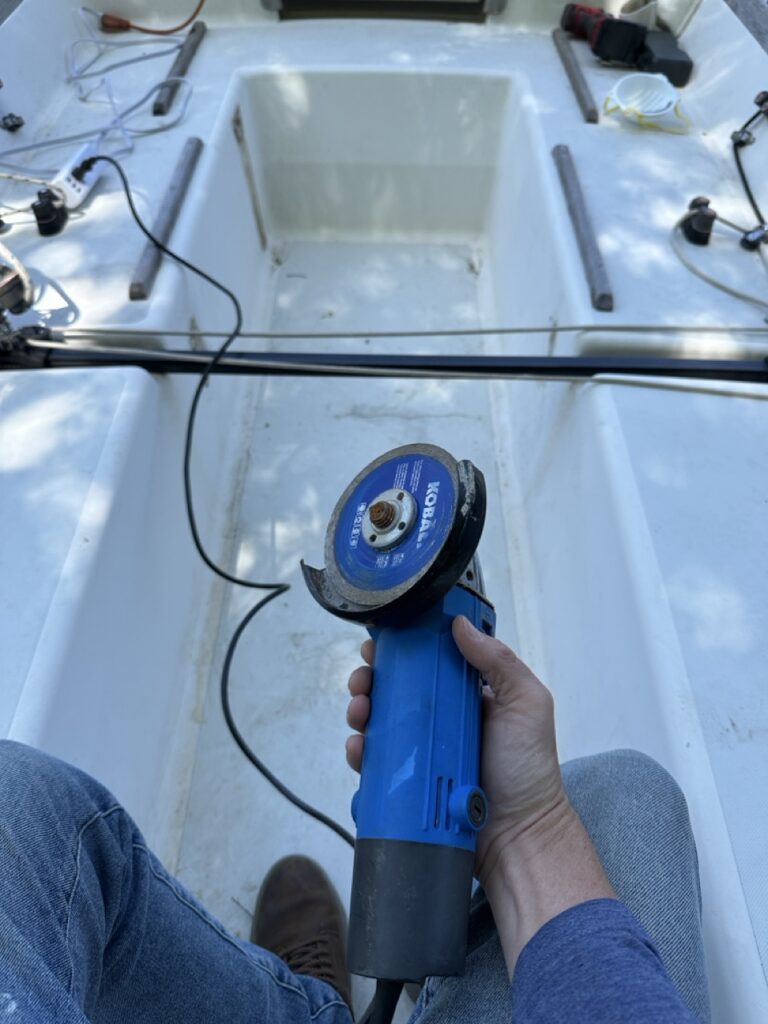
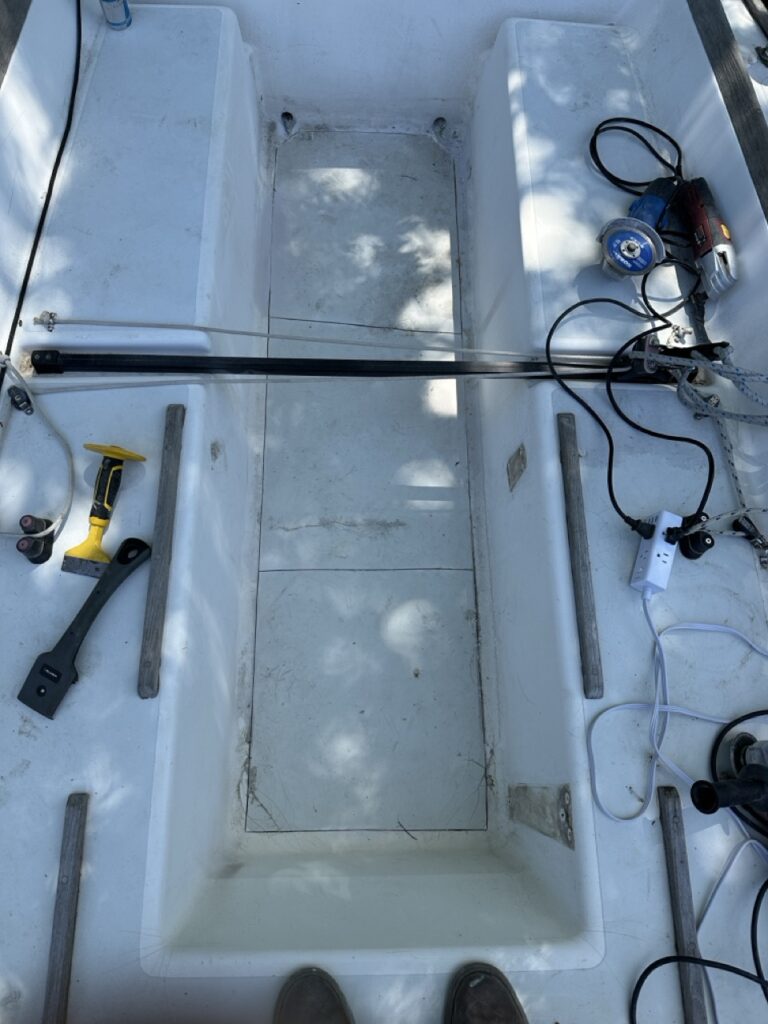
This is the point where a perfectly usable-looking boat suddenly starts to look alarming. One minute you have a cockpit floor. The next minute there is a large rectangular hole in the top skin, a pile of dusty core material, power tools everywhere, and a couple of sailors standing around saying things like, “Well, we’re committed now.”
The cutting needs to be done carefully. The idea is to remove the top skin and expose the damaged core without unnecessarily damaging the surrounding structure or cutting through the lower fiberglass skin.
Once the top skin was removed, we could see the condition of the old core and begin removing everything that needed to come out.
Removing the Wet and Rotted Core
After the top skin was off, the real cleanup began.
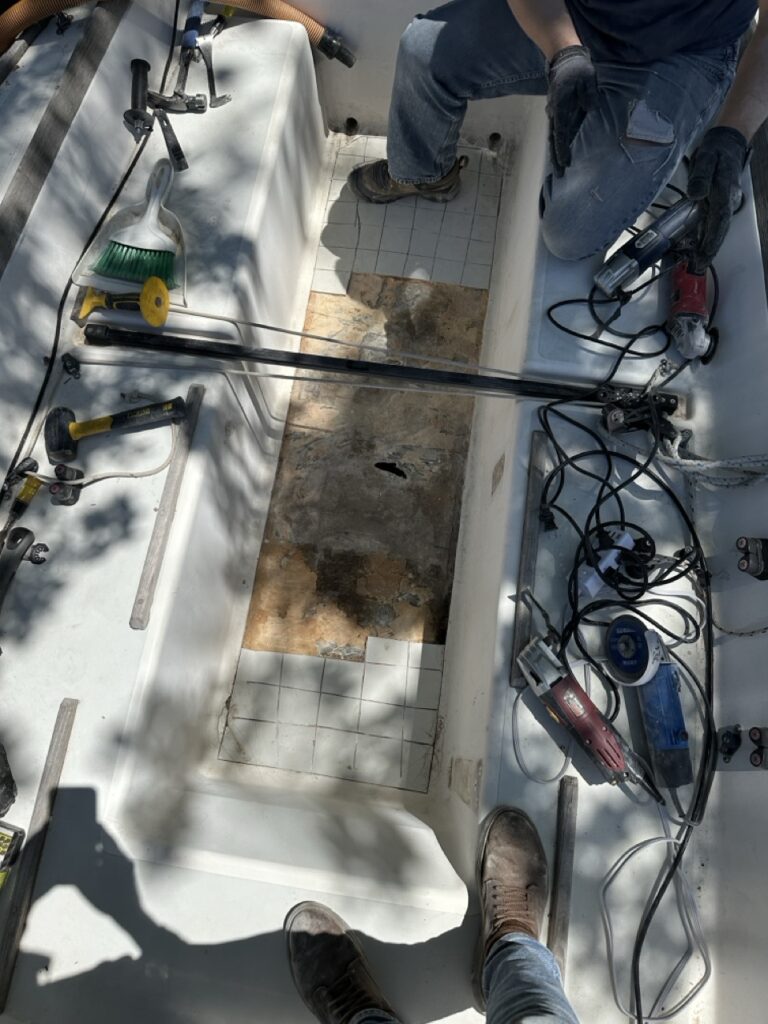
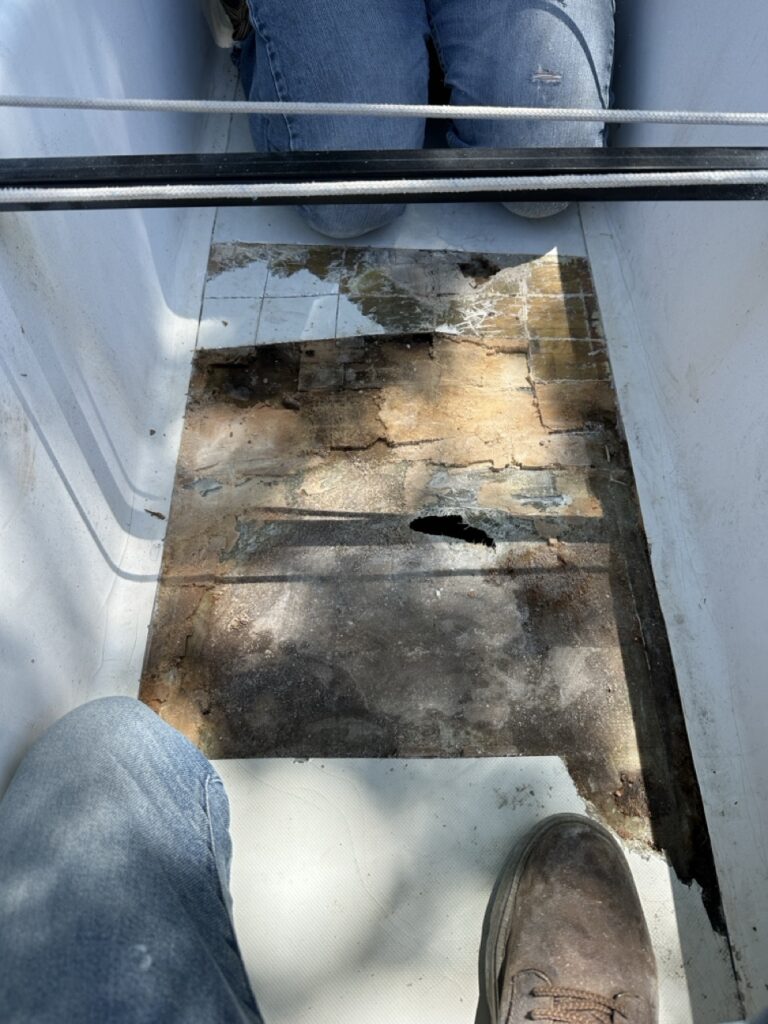
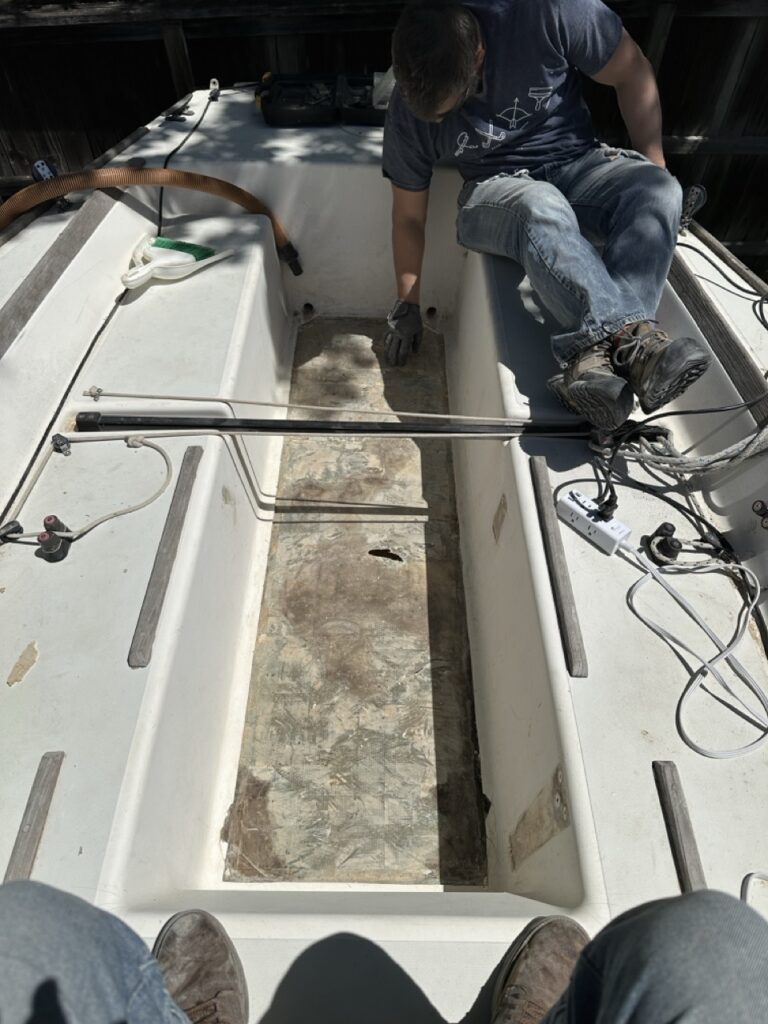
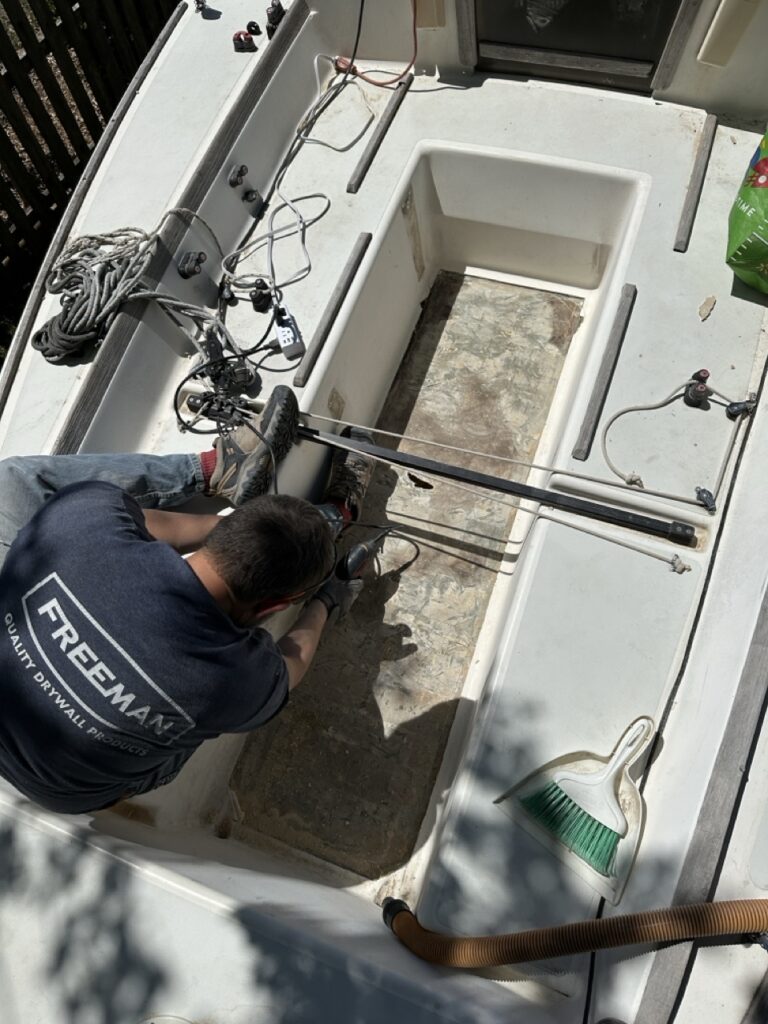
Some of the wet and rotted core came out easily. Other sections were still bonded to the lower skin and took more effort. We used a combination of cutting, scraping, grinding, and vacuuming to remove the old material and get the repair area down to the bottom fiberglass skin.
This is the messy part of the job. There is no elegant way to remove old wet core from a fiberglass boat. It is dusty, itchy, awkward work in a small space.
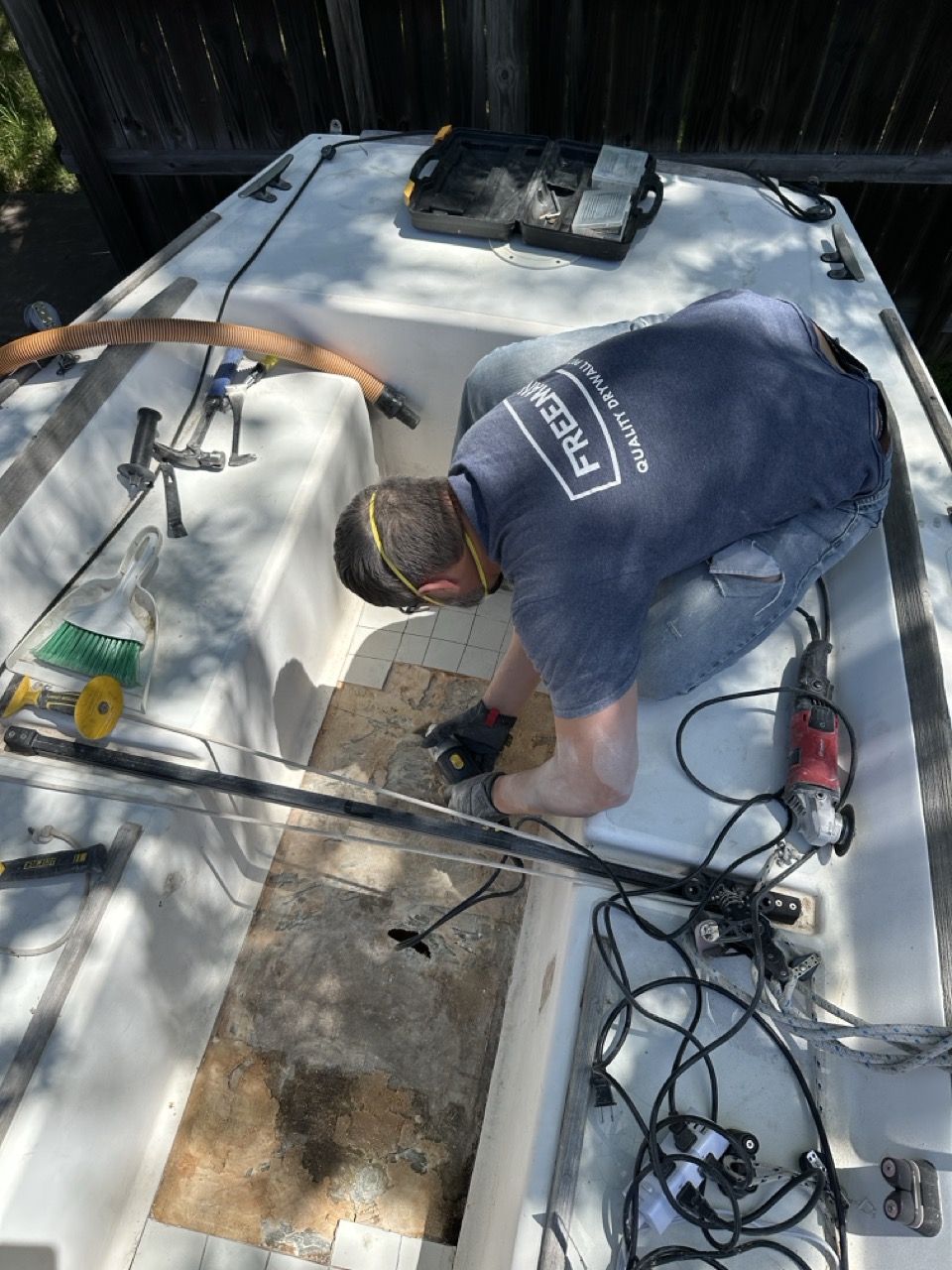
As a general safety note: fiberglass dust is not something you want in your lungs, eyes, or skin. Masks, eye protection, gloves, long sleeves, and common sense are strongly recommended. Also, if you are grinding fiberglass on a sunny day, expect to look like you lost a fight with a powdered donut by the end of it.
By the end of this stage, the wet and rotted core was gone, the remaining core in the repair area had been removed, and we had a cleaner surface to evaluate.
Patching the Bottom Skin
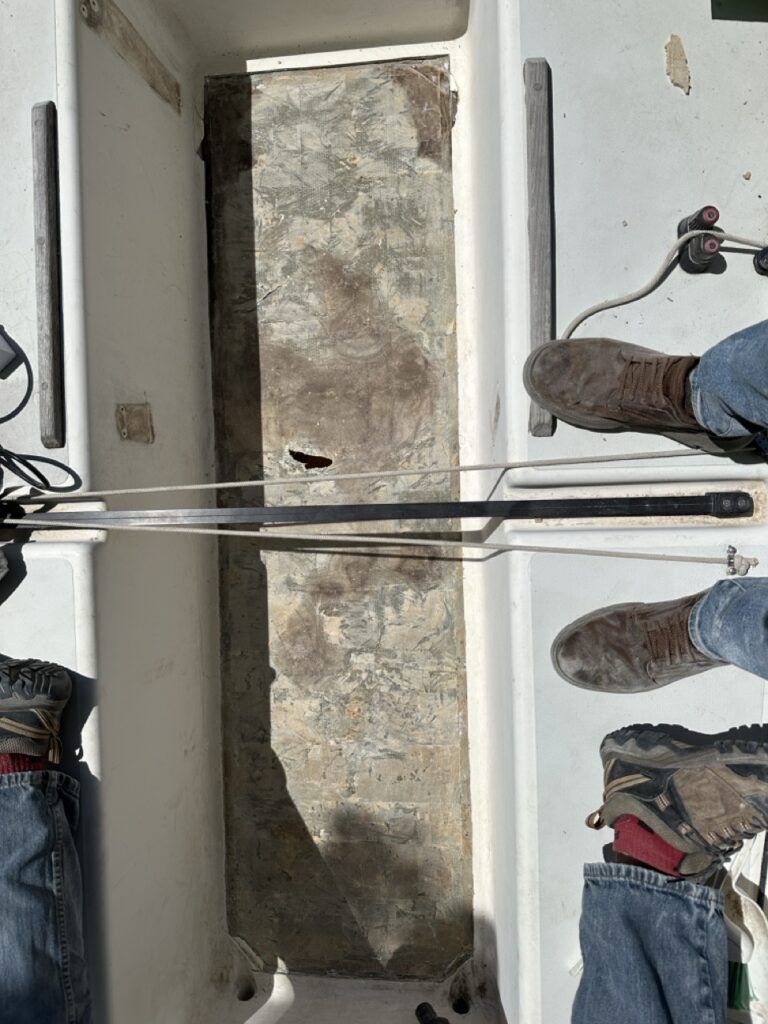
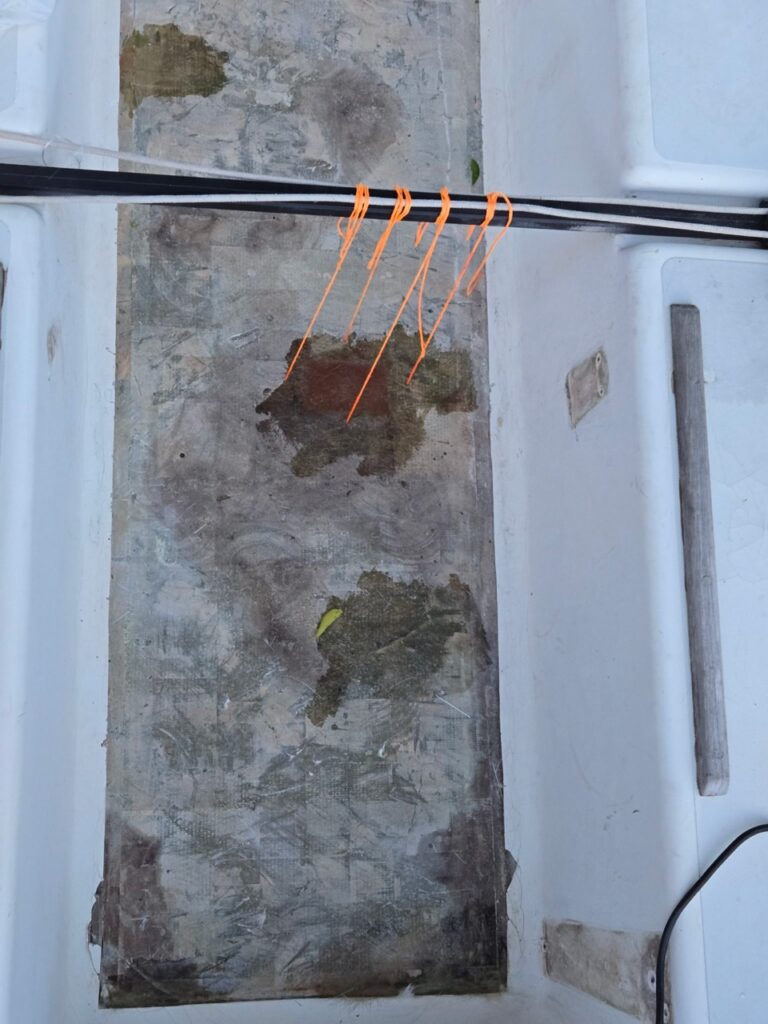
With the core removed, Evan blind patched a couple of holes in the bottom fiberglass skin.
That step is important because the new core needs a solid foundation. Before bonding in new material, any holes, cracks, voids, or weak spots in the lower skin need to be addressed. Once the new core is installed, access to that lower skin becomes limited again.
This is one of those parts of a repair that may not look dramatic in photos, but it matters a lot. Good prep work is what determines whether the finished repair is solid and long-lasting.
New Core Material
For the replacement core, we ordered 3/8-inch end grain balsa.
End grain balsa is a common core material in fiberglass boat construction. It is lightweight, strong in compression, and works well when properly bonded and sealed. The “properly sealed” part is the key. Cored fiberglass panels can last for decades when water is kept out. But once water finds a path in, the damage can spread.
For this repair, the next phase will be fitting the new balsa core, bonding it to the lower skin, filling and fairing as needed, and then rebuilding the top fiberglass skin over the new core.
Why This Matters Before Racing
Racing is hard on boats, even small ones.
A J/22 cockpit is an active place during a race. Crew members move across the cockpit, brace their feet, trim sheets, adjust controls, and shift weight constantly. A soft or compromised cockpit sole is not something you want to ignore.
A solid cockpit floor gives the crew confidence and helps the boat stand up to the loads and movement that come with racing. It is one of those repairs that is not especially glamorous, but it is absolutely worth doing right.
It also gives us a chance to learn the boat more deeply before we race it. By the time this project is done, we will know a lot more about this particular J/22 than we did when we started.
That is part of the fun of older boats. They require work, but they also teach you.
What Comes Next
This is Part 1 of the project.
So far, we have opened up the cockpit sole, removed the wet and rotted core, removed the remaining core in the repair area, patched the bottom fiberglass skin, and ordered new 3/8-inch end grain balsa core.
In Part 2, we will cover the next phase: preparing the surface, fitting the new core, bonding it in place, and beginning the process of rebuilding the cockpit sole.
After that, the project will shift from structural repair into race preparation: cleaning, rigging, tuning, hardware checks, and all the small details that go into getting an older J/22 ready for a season on the starting line.
We will continue sharing updates as the project comes together.
If you are interested in sailing, racing, learning more about boats, or getting involved with Grand Lake Sailing Club, we would love to hear from you. GLSC offers several ways to get connected, whether you are an experienced sailor, brand new to the sport, interested in crewing, or simply curious about what sailing is like.
Learn more about membership here: GLSC Membership
Interested in getting on the water or learning more about sailing opportunities? Contact Grand Lake Sailing Club